The Complete Guide to Shifting Heat and Cold Therapy From Summer Into Fall
Quick Answer: As ambient and water temperatures fall, the same cold plunge delivers a much larger physiological dose than it did in July — a 50°F plunge in October with 45°F air is a substantially harder stressor than 50°F water on a 90°F day. Shorten cold exposure times by roughly a third as the season turns, shift the balance toward heat, move plunges away from strength sessions, and rebuild tolerance gradually rather than assuming summer’s numbers carry over. Contrast therapy becomes more valuable in autumn, not less.
You spent the summer building up to four minutes at 52°F and it became almost pleasant.
The first genuinely cool morning arrives, you get in the same tub at the same temperature, and ninety seconds feels like the edge of your capacity. Nothing about your tolerance disappeared. Three separate variables changed at once, and only one of them is the water.
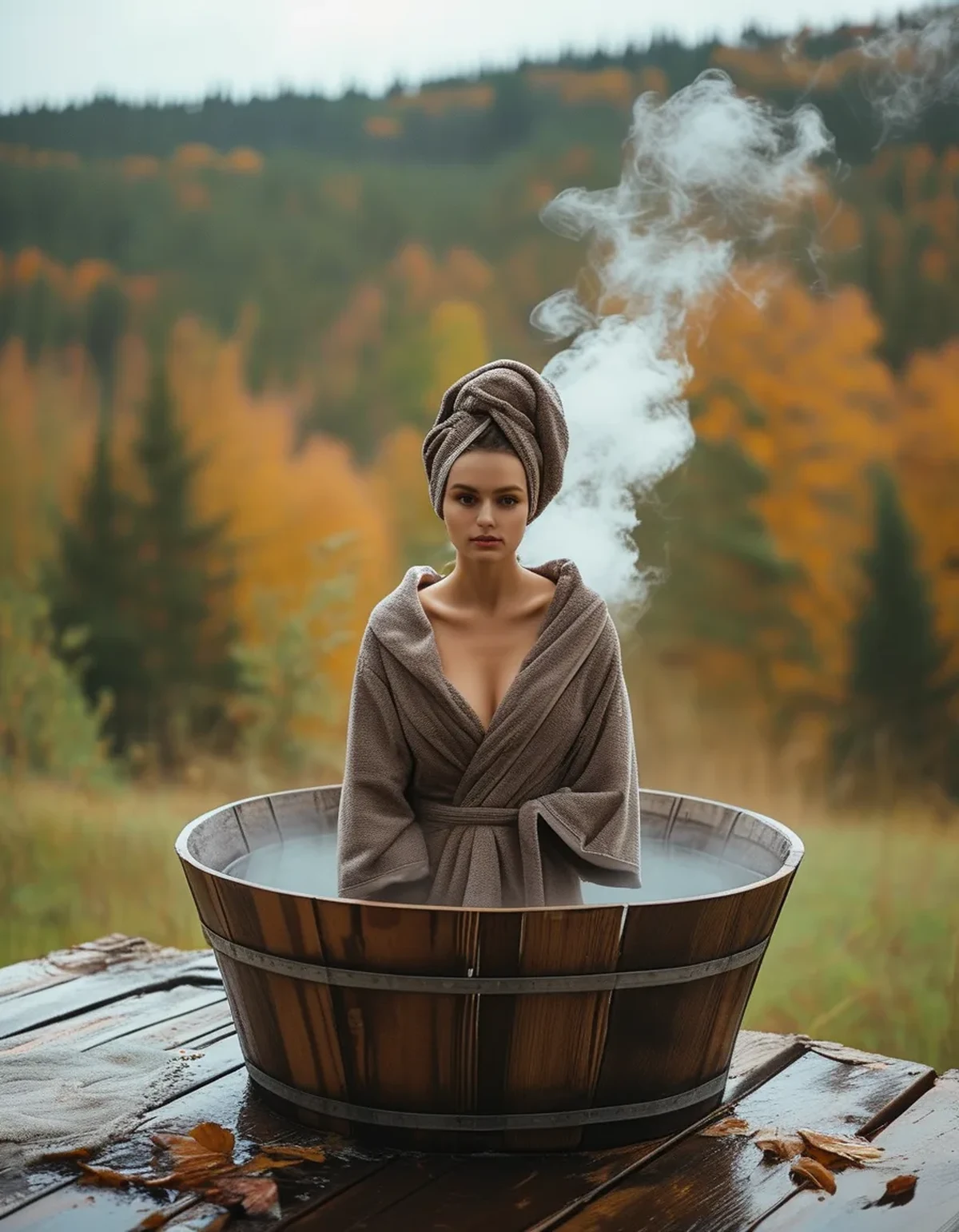
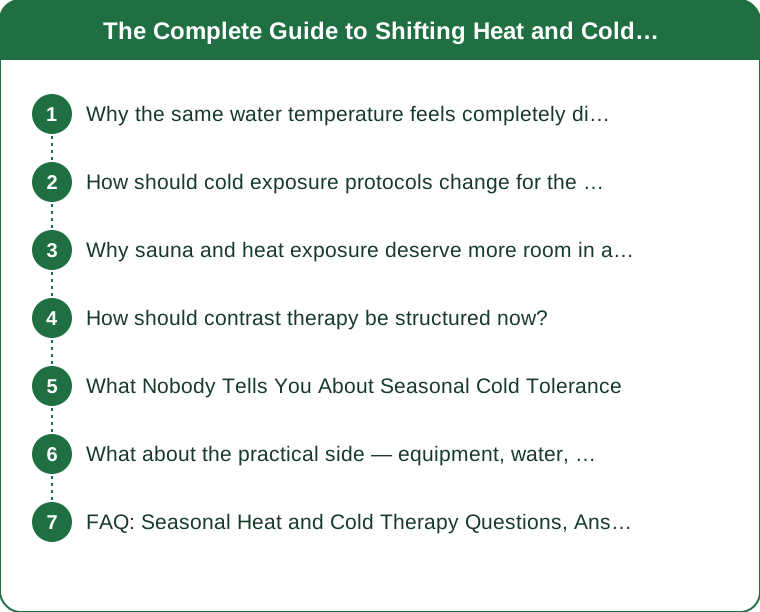
Why the same water temperature feels completely different in autumn
The number on the thermometer describes the water. It doesn’t describe the dose you’re receiving.
Air temperature before and after is doing enormous work. In summer, you step into cold water with a core temperature already elevated and skin already vasodilated from heat. Your body is happy to shed heat, so the cold feels relieving rather than threatening. In autumn, you arrive at the tub already slightly cool, with peripheral blood vessels already constricted, and the same water represents a genuine thermal challenge.
The recovery phase after is where the real difference shows. Getting out of 52°F water into 90°F air, you rewarm passively within minutes. Getting out into 48°F air, your body must generate that heat itself, and the shivering thermogenesis that follows is a meaningful metabolic and nervous-system load — one that continues long after you’ve dried off.
Your baseline skin temperature dropped too. The temperature differential between your skin and the water is what drives the shock response, and in summer your skin is warmer, so the gradient is larger in absolute terms but your body is primed to accept it. In autumn the entire system is already in heat-conservation mode, and cold exposure now works against what your physiology is trying to do rather than alongside it.
Water gets colder without you noticing. An unheated outdoor tub tracks ambient temperature with a lag. A tub sitting at 52°F in August can be at 44°F by mid-October on the same chiller setting — or with no chiller at all. Check the actual water temperature every session in autumn, because the number you assume is almost always wrong.
Practical translation: if you’re plunging outdoors and the air has dropped 20°F since summer, treat your effective exposure as roughly 30 to 40% larger than the clock says. Adjust the time down accordingly rather than defending a number you earned under different conditions.
How should cold exposure protocols change for the season?
Shorter, warmer, and less frequent — then rebuild across the autumn as tolerance re-establishes.
Cut duration by about a third to start. If summer’s habit was four minutes, start autumn at two and a half. This isn’t losing ground; it’s holding the physiological dose constant while the environment adds to it. Rebuild over three to four weeks if you want to return to longer exposures.
Consider raising the water temperature rather than shortening the time, which is the option people forget they have. A 57°F plunge in cold air can deliver the same total stress as a 50°F plunge in warm air, with a lower risk of the session becoming genuinely unpleasant — and unpleasant sessions are the ones people quietly stop doing.
Reduce frequency in the transition weeks. If summer ran at five sessions a week, three is a sensible autumn baseline while your body adapts to the ambient change. Frequency can climb again once the shock response has normalized.
Change the timing within your day. Morning plunges in autumn mean entering cold water at your coldest core temperature, in the coldest air of the day. Midday or early afternoon is considerably more sustainable, and the difference in how the session feels is larger than most people expect.
Plan the rewarming before you get in. In summer you could stand around dripping. In autumn you need a towel, dry layers, and a warm space within reach, because the post-plunge period is now where the real thermal challenge lives. Passive rewarming with warm clothing and movement beats a hot shower, which blunts some of the adaptive signal — though on genuinely cold days, comfort and consistency matter more than optimizing the last few percent.
Never plunge alone as the water drops. Cold shock response is more pronounced in colder water, and the margin for a bad session narrows. This is general information, not medical advice — cold exposure carries real cardiovascular risk for some people, and anyone with a heart condition, high blood pressure, or during pregnancy should speak with a clinician first.
Why sauna and heat exposure deserve more room in autumn
Heat is the underused half of the protocol for most people, and autumn is when its value climbs sharply.
The adaptations are genuinely different from cold. Regular sauna use drives plasma volume expansion, increased heat shock protein expression, and improved cardiovascular function — and the observational research on frequent sauna use and cardiovascular outcomes is more substantial than most people realize. These benefits don’t compete with cold; they stack.
Autumn is when heat tolerance starts to decay. You spent a summer acclimated to heat, and that acclimation fades within one to two weeks of cooler weather. Sauna sessions maintain it, which matters if you plan to train or compete somewhere warm, and matters for the cardiovascular adaptations independent of that.
Sauna after training is a reasonable autumn default. Unlike cold immersion, heat exposure doesn’t blunt the hypertrophy signal from resistance training — the evidence suggests it may support recovery and adaptation. If you’re in a strength block, this alone is a reason to shift the balance toward heat.
Practical protocol: 15 to 20 minutes at 175 to 195°F, two to four times a week. Longer isn’t reliably better, and dehydration risk climbs. Rehydrate deliberately — a sauna session can cost 500ml to a liter of fluid, and autumn thirst signals are weaker than summer ones.
Steam rooms and infrared cabins are not equivalent but both do useful things. Traditional dry sauna reaches the highest core temperatures and has the most supporting research. Infrared is gentler, better tolerated by people who find traditional sauna oppressive, and probably delivers a smaller dose of the same stimulus.
The autumn shift in one sentence: where summer’s ratio might have been three cold sessions to one heat session, autumn works better closer to one-to-one or heat-dominant, especially if training volume is high.
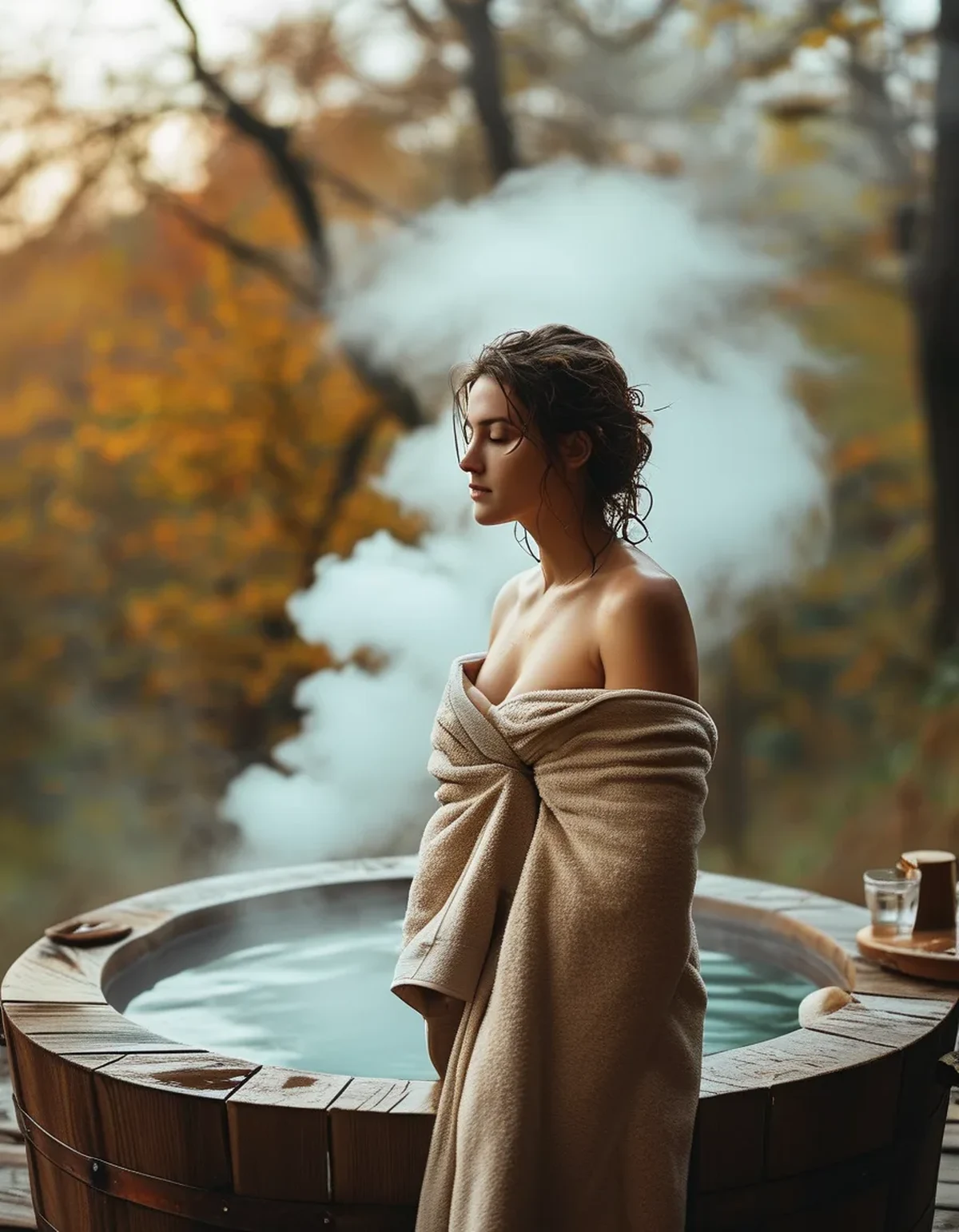
How should contrast therapy be structured now?
Contrast — alternating heat and cold — becomes more practical and more pleasant in autumn, and there’s a defensible way to sequence it.
Start hot, end hot, in cold weather. The classic advice to end cold applies best when you’re going out into warm air. In autumn, ending on heat means you leave the facility warm rather than shivering, which is both safer and dramatically more likely to keep you coming back.
A workable structure: 12 to 15 minutes sauna, 1 to 2 minutes cold, repeated two to three times, finishing with a shorter heat exposure. The cold segments should be short — the point of contrast is the vascular pumping effect from repeated transitions, not maximal cold dose.
Don’t chase the hardest possible version. Contrast therapy is where people most reliably overdo it, because each individual segment feels manageable. Three full cycles is plenty, and total session time above 60 minutes brings diminishing returns and real dehydration risk.
Sequence it around your training, not into it. Cold immersion within four hours after resistance training appears to blunt strength and hypertrophy adaptations — the evidence here is reasonably consistent. If you lift, put cold on rest days or well after, and use heat post-lift instead.
For endurance training, the trade is different. Cold immersion after a hard endurance session reduces soreness and helps you back up sooner, and the adaptation cost is smaller. During a heavy race build, that trade often makes sense.
Hydrate across the whole session, not just after. Alternating heat and cold masks fluid loss well — you don’t feel like you’re sweating during the cold segments, but the sauna phases are still costing you. 500ml during a full contrast session is a reasonable baseline.
What Nobody Tells You About Seasonal Cold Tolerance
Cold tolerance is far more contextual than people assume, and treating it as a fixed personal attribute causes most of the frustration in autumn.
Your tolerance varies with sleep, more than almost any other factor. A night of poor sleep meaningfully reduces cold tolerance the next day — sympathetic nervous system tone is already elevated, and cold exposure adds to a system that’s already running hot. A plunge that felt fine on Tuesday can be genuinely hard on Thursday for reasons that have nothing to do with the water.
Menstrual cycle phase matters and is rarely discussed. Core body temperature rises by roughly 0.5 to 1°F in the luteal phase, and thermoregulatory responses shift with it. Many people find cold exposure noticeably harder in the days before a period — this is a real physiological difference, not a motivation problem.
Recent food intake changes the experience substantially. Plunging fasted in cold weather is considerably harder than plunging after a meal, because you have less readily available substrate for shivering thermogenesis. In autumn, eating something first is a legitimate adjustment.
The adaptation you built in summer was partly habituation, not just physiology. Habituation — the blunted shock response — is real and it does persist somewhat. But a large part of what made summer plunges easy was that they were easy, and there’s no shame in the numbers resetting.
The single most surprising thing: people who reduce their cold exposure in autumn and rebuild gradually often end up with higher tolerance by midwinter than people who stubbornly defended their summer times through the transition. The stubborn approach produces missed sessions, dread, and eventually abandonment. The gradual approach produces consistency, and consistency is what actually drives adaptation.
And the thing nobody says out loud: if cold exposure has stopped being something you look forward to and become something you’re grimly enduring to keep a streak alive, the streak is now costing you more than it’s giving you. Reduce it until you want to do it again.
What about the practical side — equipment, water, and setup?
Autumn is maintenance season for anyone with an outdoor setup, and the failures are predictable.
Water temperature management flips from cooling to holding. A chiller that struggled all summer now barely runs — and in many climates you’ll want to stop chilling entirely and simply monitor, because ambient will do the work. A cheap floating thermometer checked every session is the whole intervention.
Freezing is the real risk further into the season. Pumps, filters, and exposed plumbing on outdoor tubs are vulnerable well before the water itself freezes. Know your system’s freeze protection before the first hard night, not after it.
Water quality changes as temperatures drop. Colder water holds more dissolved oxygen and biological activity slows, which generally means less frequent treatment is needed — but falling leaves and debris create a different problem. A cover becomes essential rather than optional.
Insulation earns its money now. A well-insulated tub with a good cover holds temperature overnight and dramatically reduces chiller runtime and cost. This is the highest-value upgrade for anyone plunging through a cold season.
For sauna owners, autumn is when usage spikes and it’s worth checking heater elements, stones, and ventilation before the season rather than during it. Stones should be rotated or replaced roughly annually — degraded stones hold less heat and produce harsher steam.
For anyone without dedicated equipment, autumn is genuinely the easiest time to start with cold showers. The tap water is naturally colder, no equipment is needed, and 60 to 90 seconds at the end of a normal shower delivers a real if smaller version of the stimulus. Starting here in autumn and building through winter is a better on-ramp than buying a tub in July and abandoning it in November.
FAQ: Seasonal Heat and Cold Therapy Questions, Answered
Should I stop cold plunging entirely in cold weather?
No, but the protocol should change. Shorter durations, possibly warmer water, and a solid rewarming plan. The people who get in trouble are the ones who change nothing and then either injure their consistency or get genuinely cold.
Is a cold shower as good as a plunge?
It delivers a smaller dose — less surface area, less thermal conductivity, and you can move away from the stream. For habituation and the general nervous system effects, it’s genuinely useful. For the larger metabolic and brown-fat adaptations, immersion does more.
Can I sauna and lift on the same day?
Yes, and heat after lifting appears to be either neutral or mildly helpful, unlike cold immersion. If you sauna before lifting, keep it short — a long session beforehand will meaningfully reduce strength output.
How cold is too cold?
Below roughly 50°F, the cold shock response becomes more pronounced and the margin for error narrows considerably. Most of the documented benefits appear at moderate temperatures with adequate duration, so there’s little reason to chase extremes.
How long until I feel adapted to the seasonal change?
Most people report the transition settling within two to four weeks of consistent, adjusted exposure. Pushing through without adjusting typically extends that rather than shortening it.
Does cold exposure help with the seasonal mood dip?
There’s reasonable evidence for acute mood and alertness improvement from cold exposure, and the routine and light exposure that come with an outdoor session probably contribute too. It’s a reasonable tool, and not a substitute for treatment if seasonal mood changes are significant.
This is general information, not medical advice.
TL;DR: The water didn’t change as much as everything around it did.
- The same temperature is a bigger dose in autumn — colder air before and after roughly increases the effective stress by 30 to 40%.
- Cut duration by about a third as the season turns, then rebuild over three to four weeks.
- Consider raising water temperature instead of only shortening time. It’s the option most people forget.
- End on heat in cold weather. Leaving warm keeps you coming back; leaving shivering doesn’t.
- Shift the ratio toward sauna. Heat maintains fading summer acclimation and doesn’t blunt strength adaptation the way post-lift cold does.
- Cold within four hours of lifting blunts adaptation — put it on rest days and use heat post-lift.
- Check your actual water temperature every session. An outdoor tub drops with ambient and your assumed number is usually wrong.
Start with a thermometer this week. Half the people who feel like they’ve lost their cold tolerance are actually sitting in water eight degrees colder than they think.
Keep Reading
This article is for general informational purposes only and is not medical advice. Always consult a qualified health professional for guidance specific to you.