How to Do a Cold Plunge Correctly: The Technique Most People Get Wrong
Quick Answer: Correct cold plunge technique means entering slowly over 15-20 seconds, keeping your shoulders and chest submerged, breathing in slow controlled counts instead of gasping, and staying in for 2-4 minutes at 50-59F rather than chasing the coldest water possible. Technique matters more than temperature for most of the benefit.
Most people either white-knuckle their way into water that’s too cold or hop out after 20 seconds the moment it feels uncomfortable - both miss most of what a cold plunge is supposed to do. Here’s what correct technique actually looks like, broken down by the part people usually get wrong.

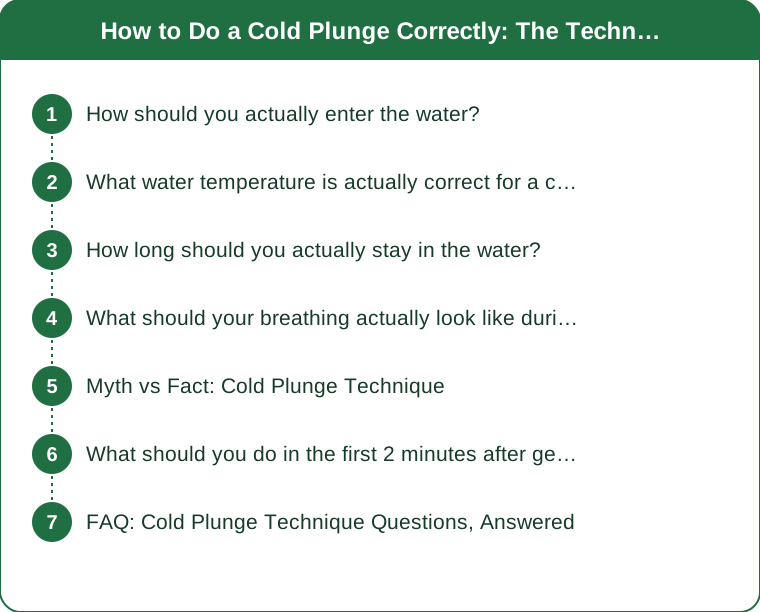
How should you actually enter the water?
Entering fast feels brave, but it’s the single biggest technique mistake - a sudden full-body cold shock spikes your heart rate and breathing so hard that most people can’t settle into a controlled breath for the first 60-90 seconds, which wastes most of the session just recovering from the entry itself.
Enter over 15-20 seconds, pausing briefly at your ankles, then knees, then hips, letting each level register fully before going further. This isn’t about being cautious for its own sake - a gradual entry lets your nervous system adjust in stages instead of firing every alarm at once.
Once you’re in to shoulder height, stay still for the first 20-30 seconds before doing anything else. Movement in cold water increases how much cold water contacts your skin (convective heat loss), which is why thrashing around actually makes the first minute feel worse, not better.
A common technique cue: count your entry in fours - four seconds to ankles, four to knees, four to hips, four to shoulders. This gives you a concrete anchor instead of just ‘go slow,’ which is vague enough that most people speed up without realizing it once the initial shock passes. Some experienced plungers also keep their hands out of the water slightly longer than the rest of their body, since hand and finger cold sensitivity can spike anxiety disproportionately to the actual physiological risk involved.
Eye contact with a fixed point ahead of you, rather than looking down at the water as you enter, is another small detail that genuinely helps - it keeps your posture upright and your breathing more open than a hunched, looking-down entry tends to allow throughout the entire process of getting in.
What water temperature is actually correct for a cold plunge?
The commonly cited effective range is 50-59F (10-15C), and colder isn’t automatically better. Water below 50F shortens how long you can safely and comfortably stay in, which often means you get less total cold exposure time than a slightly warmer plunge you can hold for the full 2-4 minutes.
Most of the documented benefits - alertness, mood lift, some recovery support - come from consistent exposure in that moderate range done regularly, not from extreme cold done rarely. A basic pool or aquarium thermometer removes the guesswork; ‘ice bath’ framing leads a lot of beginners to over-chill the water and cut their session short from discomfort.
If you’re building tolerance, starting at 59-60F and working down by a degree or two every week or two is a more sustainable technique than starting at the coldest setting available.
If you don’t have access to a dedicated cold plunge tub, a bathtub filled with cold tap water and a few bags of ice can approximate the lower end of this range - just verify with a thermometer rather than guessing, since tap water alone often lands in the 60s F depending on your location and season. Using a consistent temperature session to session also matters for building a real sense of your own tolerance over time, rather than chasing a colder number every single time you plunge.
Seasonal outdoor water sources - a lake or ocean in colder months - can also work for cold plunging, but temperature swings day to day mean checking before every session rather than assuming it matches last week’s reading.
How long should you actually stay in the water?
2-4 minutes is the range most cited for meaningful physiological response without unnecessary risk. Beyond about 5 minutes in genuinely cold water, the added benefit flattens out while the risk of excessive core temperature drop increases - longer isn’t a more effective technique, it’s just colder for longer.
If you’re new to cold plunging, 30-60 seconds is a completely legitimate starting point. Building from there over several weeks matters more than hitting 4 minutes on day one. Set a visible timer before you get in; time perception in cold water is notoriously unreliable, and most people either underestimate or wildly overestimate how long they’ve been in.
Exit immediately if you notice uncontrollable shivering that doesn’t stop when you focus on breathing, numbness spreading beyond your hands and feet, or any confusion - these are signs to get out and rewarm, not signs to push through.
Many experienced plungers use a simple mental checkpoint system: check in with yourself at the one-minute mark, again at two minutes, and decide whether to continue based on how controlled your breathing feels rather than a fixed goal you’re determined to hit no matter what. Pushing past your current comfortable range specifically to reach a round number like 3 or 5 minutes is a common mistake that adds risk without adding much meaningful extra benefit.
Hydration before a session also plays a bigger role in how long you can comfortably last than most people expect - being well-hydrated supports better circulation and temperature regulation, while a dehydrated start tends to shorten how long the cold feels manageable, independent of your actual cold tolerance or experience level.

What should your breathing actually look like during a cold plunge?
The cold shock response triggers an involuntary gasp reflex the moment cold water hits your torso - fighting this by holding your breath tends to backfire and spike panic. Instead, let the first gasp happen, then immediately shift to slow, controlled breaths: in through the nose for a count of 4, out through the mouth for a count of 6.
Making the exhale longer than the inhale is the specific technique detail that matters most - it activates your parasympathetic nervous system (the calm-down system) faster than even breathing does. Gasping, rapid shallow breathing, or breath-holding all keep your body in a stress-response loop that makes the whole session feel worse and ends it early.
If you catch yourself breathing fast and shallow, that’s the cue to consciously slow down rather than white-knuckle through - the discomfort passes faster with controlled breath than with tensed-up breath-holding.
Some plungers find it helpful to pick a single word to repeat silently with each exhale - something as simple as ‘slow’ or ‘release’ - which gives the mind a task during a moment when it would otherwise default to panic-adjacent thoughts. This is a borrowed technique from broader stress-management breathing practice, and it transfers well here specifically because the discomfort is intense but genuinely brief.
A racing heart rate during the first minute is expected and not itself a warning sign - it typically settles within 30-60 seconds as your breathing regulates, which is worth knowing in advance so it doesn’t get mistaken for a reason to panic further.
Myth vs Fact: Cold Plunge Technique
Myth: Colder water always means a better plunge. Fact: Water that’s too cold shortens your tolerance time and increases risk without adding proportional benefit - the 50-59F range done for the full 2-4 minutes typically outperforms an ice-cold 45F dip you can only hold for 30 seconds.
Myth: Shivering during the plunge means it’s working harder. Fact: Shivering is your body generating heat through muscle activity - it’s a sign you’re getting cold, not a marker of a more effective session. Controlled, non-shivering cold exposure is the technique goal.
Myth: You should hold your breath to tough it out. Fact: Breath-holding keeps your nervous system in fight-or-flight mode. Slow, controlled breathing with a longer exhale is the actual skill being trained here, and it’s what makes repeat sessions easier over time.
Myth: Full submersion to the neck is required for it to count. Fact: Submersion to the shoulders or upper chest delivers most of the benefit for most people, especially beginners - full neck submersion isn’t necessary and can increase discomfort without adding much.
Myth: You should aim to look completely calm and unaffected during a plunge. Fact: Visible discomfort - gritted teeth, a sharp inhale, tensed shoulders - is a normal physiological response even for experienced plungers, and forcing an outwardly calm appearance doesn’t change what’s happening internally or add any extra benefit.
What should you do in the first 2 minutes after getting out?
Your body continues cooling for a few minutes after you exit - a phenomenon called afterdrop, where colder blood from your limbs circulates back to your core. Dry off immediately and layer up with warm, dry clothing rather than standing around in a wet swimsuit deciding what to do next.
Avoid a hot shower right away. Jumping straight into hot water after a cold plunge can cause a rapid blood pressure shift for some people; gentle movement (walking, light stretching) to rewarm naturally first is the safer technique, followed by a warm - not scalding - shower once you’ve stopped shivering.
Some light shivering after getting out is normal and is your body’s way of generating heat; it should ease within 10-15 minutes. If it intensifies or doesn’t stop, prioritize warming up over finishing any other part of your routine.
Eating or drinking something warm, like tea, about 10-15 minutes after getting out can also support the rewarming process, though this is a comfort measure more than a strict technique requirement. Some people find gentle movement like a short walk more effective for rewarming than standing still bundled in layers, since movement generates heat through muscle activity in a way that passive layering alone doesn’t. Keeping a dry towel and a warm layer within arm’s reach before you even get in the water removes any delay in this step once you’re out and your hands are cold and less coordinated, when even simple tasks like unzipping a jacket can suddenly feel clumsy and take much longer than they normally would.
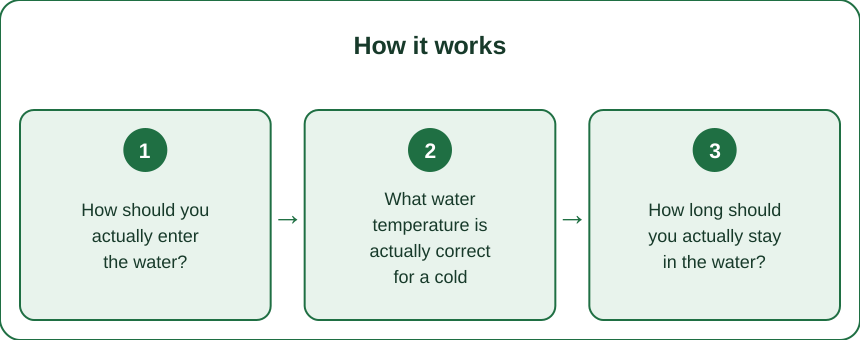
FAQ: Cold Plunge Technique Questions, Answered
Is it normal to feel a strong urge to get out in the first 30 seconds?
Yes, that’s the cold shock response and it typically peaks in the first 30-60 seconds then eases as your breathing settles - it’s the most common reason people quit early even though the hardest part passes quickly.
Should beginners use a timer or just go by feel?
A visible timer is more reliable technique than going by feel, since cold water distorts time perception in both directions and can lead to cutting a session too short or accidentally staying in too long.
Can I do a cold plunge every day?
Many people do, but starting with 3-4 sessions a week while your body adapts is a more sustainable technique than daily use from the start. This is general information, not medical advice - check with a doctor first if you have a heart condition or are pregnant.
Does it matter what I wear into the water?
A simple swimsuit is all that’s technically needed, though some people find neoprene booties or gloves make the entry more comfortable without meaningfully reducing the core benefit, since most of the physiological response comes from torso and core temperature change rather than the extremities.
TL;DR:
- Enter slowly over 15-20 seconds instead of jumping in fast
- 50-59F for 2-4 minutes beats extreme cold for a much shorter time
- Slow breathing with a longer exhale is the real technique skill, not breath-holding
- Rewarm gradually afterward instead of jumping straight into a hot shower
This is general information, not medical advice - check with a doctor before starting if you have any cardiovascular condition.
Keep Reading
This article is for general informational purposes only and is not medical advice. Always consult a qualified health professional for guidance specific to you.