Does a Cold Plunge Actually Do More Than a Cold Shower? What the Evidence Says
Quick Answer: A cold plunge and a cold shower trigger the same physiological response — vasoconstriction and a stress hormone release. The plunge just delivers a bigger dose through lower temperature and full immersion. Start with the free version. Buy the tub only if you’ve already built the habit and want more of the same effect.
A cold plunge tub costs somewhere between a decent bike and a used car. Your shower already has a cold tap.
The marketing implies these are different categories of thing. Physiologically, they’re the same thing at different volumes.

Is a Cold Plunge Physiologically Different From a Cold Shower?
No — not in mechanism. Both trigger the same cold exposure response: peripheral blood vessels constrict, the body mounts an acute stress response, and stress hormones rise.
What differs is degree, along two axes:
- Temperature. A plunge is typically held considerably colder than tap-cold water, which in most homes bottoms out well above plunge temperatures.
- Coverage. Full-body immersion exposes far more surface area than water running down one side of you at a time while you shuffle around trying to get your back under it.
So the plunge amplifies the same response rather than triggering a different one. That distinction matters when you’re deciding what to spend, because “more of the same” and “a categorically better thing” justify very different price tags.
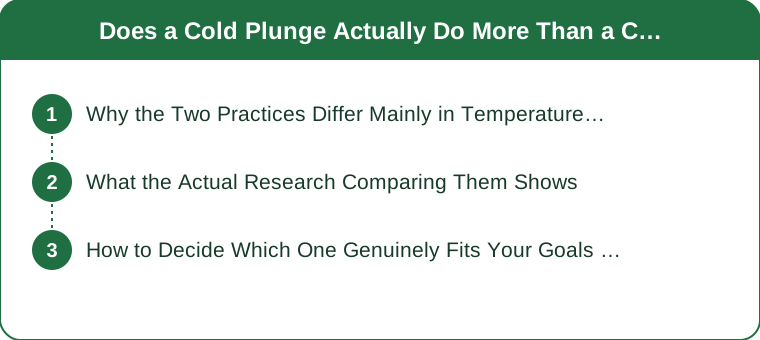
What Does the Research Actually Say About Plunge vs. Shower?
Honestly? Direct head-to-head research comparing the two specific practices is limited. Anyone claiming a decisive study is overselling.
What the broader cold exposure literature does support is a dose-response relationship: more intense or longer exposure generally produces a correspondingly larger response, up to a point. That’s consistent with the shared-mechanism explanation — it’s what you’d expect if the plunge were simply a bigger dose of the same stimulus.
It’s also worth being clear about which claims are which. Cold exposure’s effects on acute alertness and perceived recovery are the better-supported end. Broader claims about metabolism, immunity, or long-term mood sit on considerably thinner evidence, and none of that changes based on whether you used a tub or a shower.
The honest summary: the plunge probably delivers more of the effect. Whether that increment is worth several thousand dollars is a budget question, not a science question.

Myth vs. Fact
Myth: A cold shower “doesn’t get cold enough to count.” Fact: It triggers the same response, just at lower intensity. Lower dose isn’t zero dose.
Myth: The plunge works through a special mechanism showers can’t access. Fact: Same vasoconstriction, same stress response. The variables are temperature and coverage.
Myth: Colder is always better. Fact: Dose-response holds up to a point. Very cold exposure carries genuine risk, particularly for people with cardiovascular conditions, and pushing intensity is not automatically pushing benefit.
Myth: You need to tough out several minutes for it to work. Fact: The acute response begins within seconds. Long durations are about tolerance and preference, not about switching on the mechanism.
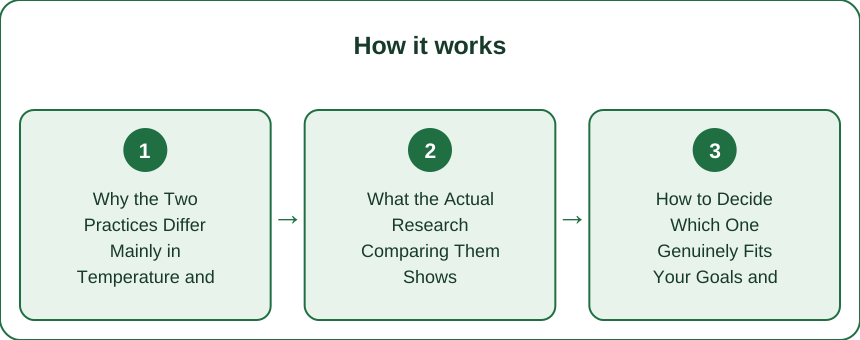
How Should You Decide Which One Fits You?
Sequence it. There’s a genuinely sensible order here, and it saves most people a large purchase.
Start with cold showers. Zero additional cost, zero space, zero maintenance. End your normal shower with 30–90 seconds of cold and see whether you actually keep doing it. This is the real test, and it fails more often than people expect — plenty of tubs end up as expensive laundry baskets.
Build the habit for a few weeks before considering an upgrade. If you’ve done it consistently for a month and want a more intense version, you now have evidence that a plunge would get used.
Then weigh the practical costs honestly, not just the sticker price:
- Space. A tub needs a permanent spot, indoors or out.
- Water and maintenance. Filtration, sanitation, water changes, and in many setups a chiller running continuously.
- Ongoing effort. The maintenance is the part people underestimate, and it’s the most common reason a plunge stops getting used.
A reasonable middle step: cold showers plus occasional access to a plunge at a gym or recovery studio. You get the higher dose sometimes without owning the maintenance.
Practically, either version goes better when getting warm afterward is easy. Have dry clothes ready — a warm layer and something comfortable like high waist yoga leggings waiting on the rail beats standing around shivering while you look for socks.
When to check with a professional: cold exposure causes a real cardiovascular response. If you have a heart condition, high blood pressure, Raynaud’s, or you’re pregnant, talk to a doctor before starting either version. Never plunge alone in open water. This is general information, not medical advice.
FAQ
How cold does a cold shower need to be?
As cold as your tap goes, which varies a lot by season and region. You don’t control the temperature, so control the duration instead — 30–90 seconds is a reasonable working range for most people.
Is it better before or after a workout?
Cold exposure immediately after resistance training may blunt some adaptation signals, so many people put it on rest days or hours after lifting. Before or well apart from training avoids that question entirely.
Do I need to work up to it gradually?
Gradual is easier to sustain and reduces the gasp reflex that makes the first attempts unpleasant. Start with 15–20 seconds at the end of a warm shower and extend from there.
TL;DR
- Same mechanism, different dose. Plunge and shower both trigger vasoconstriction and an acute stress response.
- The plunge is colder and covers more of you — an amplifier, not a different tool.
- Direct comparative research is limited, but broader cold-exposure evidence supports a dose-response relationship.
- Start with showers. Consider a plunge only after a consistent habit exists, and price in space, water, and maintenance.
- Talk to a doctor first if you have cardiovascular conditions, are pregnant, or have circulation issues.
Keep Reading
This article is for general informational purposes only and is not medical advice. Always consult a qualified health professional for guidance specific to you.