Why Your Cold Plunge Stopped Feeling Like Anything (And What That Actually Means)
Quick Answer: Feeling less shock from cold plunging after a few weeks is expected adaptation, not a sign it’s stopped working. Your nervous system habituates to the cold response in 2-4 weeks; the benefits shift from ‘feeling intense’ to ‘training the response’ — which means it’s time to adjust temperature or duration, not quit.
The first week, 50°F water felt like an event. Now, six weeks in, you barely gasp. That’s not your imagination, and it’s not a sign the practice stopped doing anything — it’s your body doing exactly what cold exposure is supposed to train it to do.

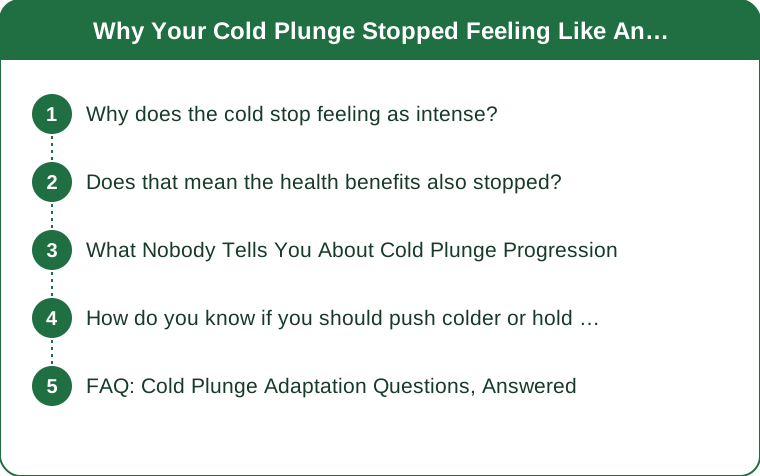
Why does the cold stop feeling as intense?
Your body’s acute stress response — the gasp reflex, the racing heart, the panic spike — is a trainable reflex, and it habituates fast. Studies on repeated cold water immersion show the sharpest drop in perceived intensity happens in the first 2-4 weeks of consistent exposure, as your nervous system learns the water isn’t a threat.
Does that mean the health benefits also stopped?
No — most of the studied benefits (mood lift, alertness, some circulation and inflammation markers) come from the exposure itself, not from how shocked you feel. A calmer response is actually the point: it means your system is regulating stress more efficiently, which is the trained adaptation people are usually chasing.

What Nobody Tells You About Cold Plunge Progression
Here’s the part most guides skip: once the shock fades, you have to decide what you’re actually training for. If your goal was the mental toughness practice, staying at the same temp and just doing it consistently is enough — the value was never really about the gasp.
But if you specifically want to keep challenging your system (for continued adaptation gains), you’ll need to either drop the temperature a few degrees, extend the duration by 30-60 seconds, or reduce how often you do it so some novelty returns.
How do you know if you should push colder or hold steady?
If you’re plunging for stress-resilience training or a morning ritual, hold your current temp and duration — consistency matters more than intensity here. If you’re chasing continued physiological adaptation (recovery, metabolic effects), progress gradually: 1-2°F colder or 15-30 seconds longer every couple of weeks, never both at once.
FAQ: Cold Plunge Adaptation Questions, Answered
How long until cold plunging stops feeling shocking?
Most people report a major drop in intensity within 2-4 weeks of 3+ sessions per week. Full habituation can take 6-8 weeks.
Should I go colder just because it stopped feeling hard?
Only if your specific goal needs continued challenge. If the current temp already gets you the outcomes you want, colder isn’t automatically better.
Can you lose cold adaptation if you stop for a few weeks?
Yes — most of the acquired tolerance fades within 2-3 weeks of stopping, similar to how quickly it was built.
TL;DR:
- Losing the shock factor after 2-4 weeks is expected nervous system habituation, not failure
- Most studied benefits come from the exposure itself, not the intensity of your reaction
- Decide your goal first: ritual/consistency needs no change, continued adaptation needs gradual progression
- Adaptation fades in 2-3 weeks off — consistency matters more than any single session
Keep Reading
This article is for general informational purposes only and is not medical advice. Always consult a qualified health professional for guidance specific to you.