The Complete Guide to Cold Plunging: From First Dip to a Sustainable Routine
Quick Answer: Cold plunging works through vasoconstriction and a nervous-system stress response that, with practice, builds tolerance and may support recovery and mood. Start at 60°F for 1-2 minutes rather than jumping to extreme cold, build gradually over 4-6 weeks, and always have a plan for safely exiting and rewarming.
Cold plunging looks simple from the outside — get in cold water, feel great after. In practice, most people either quit in week one from overdoing the cold too fast, or never see the benefits because they’re doing it inconsistently. Here’s the complete picture.

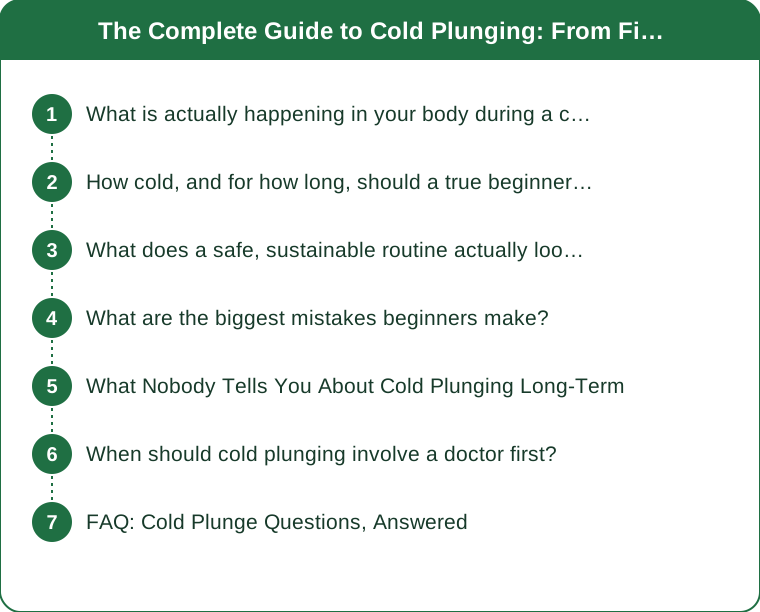
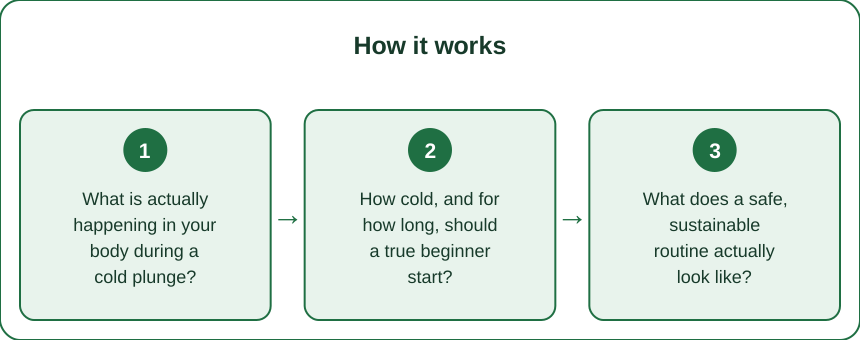
What is actually happening in your body during a cold plunge?
Cold water immersion triggers vasoconstriction — blood vessels near your skin narrow to preserve core body heat, shunting blood toward your vital organs. Your nervous system also fires an acute stress response (the classic gasp reflex, elevated heart rate, a surge of norepinephrine), which is the same fight-or-flight machinery activated by other acute stressors.
With repeated exposure, your body’s stress response to cold becomes more efficient and controlled — this adaptation, not any single session, is where most of the reported benefits (improved mood regulation, stress resilience, and subjective recovery) actually come from.
It’s worth being precise about what’s established versus emerging: reduced perceived muscle soreness and improved mood are reasonably well-supported in current research; claims about significant metabolic or fat-loss effects are much less settled.
How cold, and for how long, should a true beginner start?
Start at 60°F (about 15°C) for 1-2 minutes, not the 39°F extreme-cold content you see online. Elite or experienced cold plungers building toward those temperatures got there gradually over months, not their first week.
A reasonable progression: weeks 1-2 at 60°F for 1-2 minutes, weeks 3-4 at 55°F for 2-3 minutes, weeks 5-6 at 50°F for up to 3 minutes. There’s no strong evidence that going colder or longer produces proportionally greater benefit — consistency matters far more than extremity.
What does a safe, sustainable routine actually look like?
2-4 sessions a week is a commonly recommended frequency for building tolerance without overtaxing your nervous system — daily plunging isn’t necessary for the benefits and increases the risk of skipping proper rewarming or ignoring early warning signs of overexposure.
Always have a rewarming plan ready before you get in: warm (not hot) clothes, a warm beverage, and a plan to move your body gently afterward, since active rewarming through light movement is generally considered safer and more effective than jumping straight into a hot shower.

What are the biggest mistakes beginners make?
Going too cold too fast is the single most common reason people quit — an unprepared nervous system meeting extreme cold produces genuine panic, not just discomfort, which sours people on the entire practice before they’ve given it a fair trial.
Skipping the breath control step is a close second — controlled, slow breathing during the initial cold shock (rather than gasping and holding breath) is trainable and dramatically improves the experience within the first few sessions.
Ignoring known contraindications matters too: cold plunging is not recommended for people with uncontrolled heart conditions, Raynaud’s phenomenon, or during pregnancy without a doctor’s clearance — this is exactly the kind of decision to make with your physician, not a wellness influencer.
What Nobody Tells You About Cold Plunging Long-Term
Here’s what the highlight-reel cold plunge content leaves out: the mental benefit most people report — feeling capable of doing something uncomfortable on purpose — often outlasts and outweighs any specific physiological benefit. People who stick with cold plunging for 6+ months consistently describe it less as a recovery tool and more as a daily practice in choosing discomfort deliberately, which carries over into how they handle other hard things.
That’s not a small effect, but it’s a different effect than the fat-loss or metabolism claims that circulate — worth knowing which benefit you’re actually training for.
When should cold plunging involve a doctor first?
If you have any cardiovascular condition, are pregnant, have Raynaud’s phenomenon, or take medication affecting blood pressure or heart rate, get clearance before starting. Cold water immersion is a genuine cardiovascular stressor, and the acute stress response that makes it beneficial for healthy people is exactly what makes it risky for certain conditions.
FAQ: Cold Plunge Questions, Answered
How soon after a workout should I cold plunge?
Immediately to within a few hours works for most recovery goals, though some research suggests plunging right after strength training specifically may blunt some muscle-building adaptations — separating cold plunges from strength days by several hours is a reasonable compromise if muscle growth is a priority.
Is a cold shower a legitimate substitute for a cold plunge?
It’s a real, accessible starting point with a genuinely similar stress-response mechanism, though full-body immersion typically produces a stronger effect than a shower’s partial coverage.
How do I know if I’m overdoing it?
Watch for numbness lasting beyond the session, uncontrollable shivering that doesn’t stop with rewarming, or a sense of panic rather than manageable discomfort — any of these mean scaling back duration or temperature, or stopping altogether and consulting a doctor if symptoms persist.
TL;DR:
- Cold plunging triggers vasoconstriction and a trainable stress response, not a fat-loss shortcut
- Start at 60°F for 1-2 minutes; build gradually over 4-6 weeks rather than chasing extreme cold
- 2-4 sessions a week with a real rewarming plan beats daily plunging without one
- Cardiovascular conditions, Raynaud’s, and pregnancy require a doctor’s clearance first
This is general information, not medical advice — when in doubt about a specific health condition, check with your physician before starting.
Keep Reading
This article is for general informational purposes only and is not medical advice. Always consult a qualified health professional for guidance specific to you.